
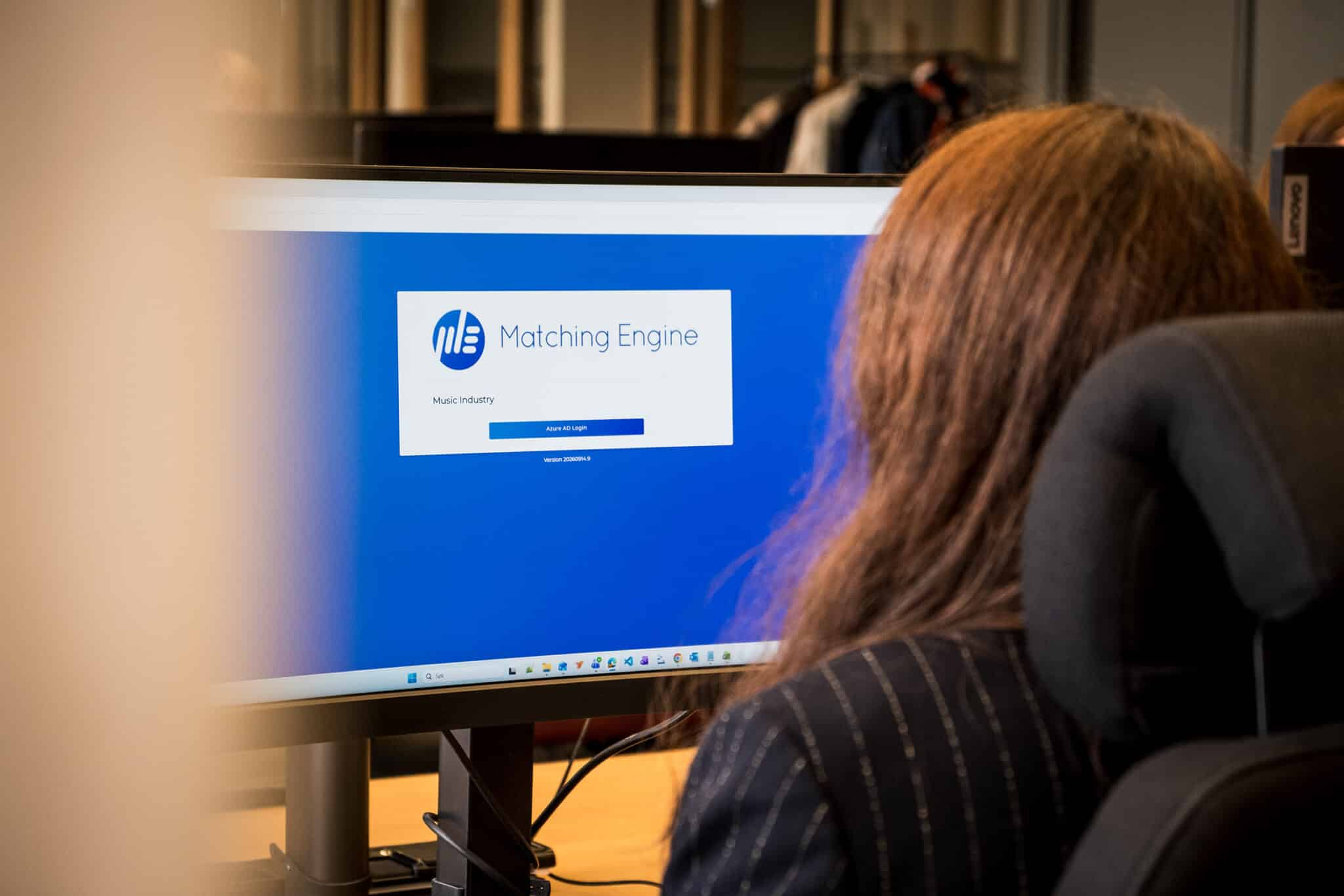
We will be implementing a new settlement system in 2026 that will provide robust, secure and cost-effective settlement in the years to come. Unfortunately, we have experienced challenges in the implementation phase that have led to delayed settlements this year. We know this creates uncertainty and frustration. Here we explain why it has happened, what we are doing to resolve the issues, and what you can expect going forward.
In order to be equipped for increasingly complex rights management, offer the best possible services to members and keep costs down, we have made a significant investment in new systems for matching, data processing and settlement.
The goal is faster and more precise settlements, better quality and more efficient rights management.
More and more of our settlement areas are now being handled in the new solutions. Unfortunately, the introduction has been more demanding than expected. Technical challenges and the need for extensive quality assurance have led to delays and postponed settlements in 2026.
When we receive money and reports from customers in Norway and sister societies around the world, there are several steps that must be completed before the money can be paid to the licensees.
Some clients and affiliates send detailed data files with all the necessary information. Others send data in other formats. From the over 75 international affiliates we receive money from, the files come in many different varieties.
All of these different files – in different formats – must be read in, validated and quality assured before they can be included in a settlement.
Once the files have been received and read into the system, each performance must be linked to the correct musical work and the correct copyright holder.
This is a comprehensive process that is done both automatically and manually. For foreign income, we also need to ensure that the money is received for the correct shares of our members, as the share distribution can vary between countries.
Only when the music usage is linked to the correct work and we are certain that the data basis is correct can the money be settled and paid out.
Our old billing systems were built on a technical platform that was not sufficient to handle future rights management. It was also no longer operational. It was absolutely necessary to switch to a more modern system.
In 2022, we therefore chose to invest in a new system for matching of carryovers and settlement. The system is called Matching Engine and is provided by Spanish Point Technologies. The company is a leading supplier of such solutions, and is used by several other large European companies, and in North America, and several are experiencing the same challenges as us in the implementation phase.
We worked with the supplier on development and testing for three years before the gradual introduction began in the fall of 2025.
In October and November 2025, broadcasting, Video on Demand (VOD) and cinema were moved to the new solution. In January 2026, the concert area was transferred, with the first settlement in the new system in March. The last area to be moved was settlements from abroad.
We advised before the introduction that the transition could result in delays. However, the scope and duration of the challenges have been greater than we expected.
In parallel with the introduction of the Matching Engine, we have invested in a specialized solution from ICE for handling music streaming. Streaming services generate very large amounts of data, and ICE offers technology and databases specifically designed to identify and process this type of music usage.
ICE is already used by several major international copyright organizations, including STIM in Sweden, PRS for Music in the UK and GEMA in Germany.
The solution ensures that we receive, among other things, efficient processing of streaming data and precise billing to our members.
We have been working with Spanish Point on the development and testing of the Matching Engine for three years before we started the gradual introduction in the fall of 2025. For a period, we ran the old and new systems in parallel. Deliveries were matched to works in the new system, while the actual settlement was still carried out in the old one.
Nevertheless, the transition from testing to regular operations has proven to be significantly more demanding than expected.
When the systems have been put into use with large amounts of real data, we and the supplier have uncovered errors and issues that have required further development, testing and quality assurance. The work of correcting errors and ensuring that the settlements are correct has unfortunately taken longer than planned.
Several sister organizations in Europe and North America are also in the process of implementing the Matching Engine and have reported similar challenges in the implementation phase. This does not change our responsibility to make our settlements work as they should.
Solving the billing challenges is our highest priority. We work daily with error correction, data entry, quality assurance, testing and improving the systems. We have brought in additional resources and are now increasing capacity further. At the same time, we are working closely and continuously with the supplier to get the solutions fully stable as quickly as possible.
The most important thing is not only to have the settlements completed quickly, but to be sure that the money is distributed on the correct basis and to the correct rights holders.
The system is working well in several settlement areas, but we are not yet there. We expect that delays may still occur in some settlement areas until the end of 2026. We therefore do not want to promise that all settlements will follow the normal schedule for the rest of the year until we are sure that the systems are working stably.
Our goal and our clear expectation is a stable and predictable settlement situation during 2027.
We know how important the settlements are for our members, and the work of getting this in place has the highest priority.
If you have any questions about a settlement or income you are waiting for, you can contact TONO's member service at medlem@tono.no or 22 05 72 80.
Read more:
Here you can read previous information about settlements and the introduction of the new systems:
https://www.tono.no/tono-utbetaler-321-millioner-kroner-for-musikkstromming/
https://www.tono.no/utsatt-marsavregning-kommer-i-juni/
https://www.tono.no/tono-utbetaler-275-millioner-kroner/
https://www.tono.no/forsinket-utbetaling-fra-strommetjenester/
https://www.tono.no/avregning-fra-musikkstromming-i-april/
https://www.tono.no/tono-utbetaler-51-millioner-kroner/
https://www.tono.no/nytt-avregningssystem-oker-effektiviteten-og-kvaliteten/
https://www.tono.no/utbetaler-200-millioner/
https://www.tono.no/karl-vestli-stort-it-loft-og-nye-vilkar-for-konsertarrangorer/
https://www.tono.no/tono-har-inngatt-avtale-med-spanish-point-technologies/
Regular updates will be published here about the process leading up to the upcoming autumn settlement on September 25th.
September 25st:
Today we are paying out NOK 61,1 million to TONO members. See more info in the settlement letter that those of you who are receiving a settlement have now received by email.
September 18st:
We are working hard and are on track with what is to be paid in the September settlement. The next step in the process will take place on Monday, when finance will take over the baton in order to be able to pay out on Friday, September 25th as planned.
September 17st:
TONO will settle for many areas next Friday, but members who will receive settlement from abroad and streaming will receive an email today with information that the foreign settlement includes Belgium, Denmark and Finland, and that the streaming payment must be postponed 1-2 weeks.