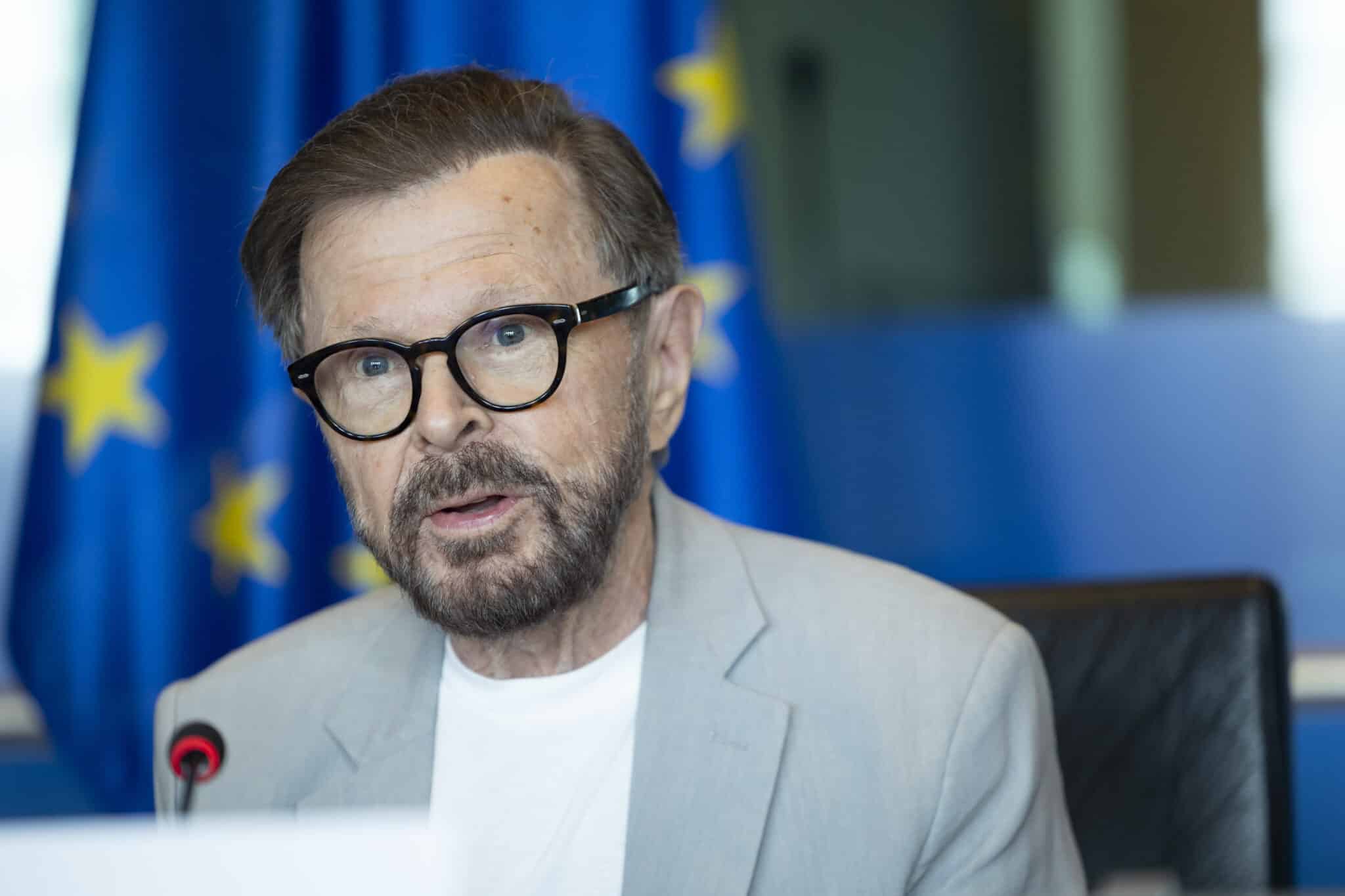
 Photo: Daina Le Lardic/EP
Here you can read a translated version of CISAC President Björn Ulvaeus's foreword to CISAC's annual report, which was published on May 22, 2025.
/ 23/05/2025 / Willy MartinsenRead also: «Copyright under pressure: CISACS annual report 2025 published» (tono.no)
It is a pleasure for me to present CISAC's Annual Report for 2025. The report demonstrates the great and important work done by CISAC to support creators around the world.
We live in a time of enormous upheaval. Nowhere is this more evident than in the rise of generative artificial intelligence (AI), a force that raises fundamental questions about what it means to be an originator and what creativity really is.
How can CISAC best serve the interests of creators in the face of these developments? The answer is simple: We must ensure the protection of human creators in an AI-driven environment. This is our highest priority.
The debate is approaching a crucial point. Lawmakers in many countries are now considering concrete changes to copyright and intellectual property laws. CISAC and our associated authors have a strong voice in this discussion, and our message must be loud and clear:
This is about protecting the entire system of copyright and creators' rights. These principles are the very oxygen that creators and the creative economy depend on to exist.
I am convinced that the AI revolution can be not only the biggest, but also the best, revolution the creative industries have ever faced. However, this requires the establishment of a legitimate and mutually respectful collaboration between creators and AI actors.
Unfortunately, there is an alternative, and in my view, far riskier approach. That approach favors a weakened rights framework and broad exceptions to copyright. This would deprive creators of the right to negotiate the use of their works, and would be a historic setback for both artists and the technology sector.
I think it is important to be clear now: Protecting copyright does not mean that we should oppose technological development. On the contrary, it means that we should embrace and license AI tools within a safe and legal framework. I say this as a big supporter of AI and all the exciting things technology can do to enhance human creation. However, one fundamental premise must be underlying this: Copyright must be respected.
Specifically, this means that creators must retain the right to license their own works, AI training must be subject to clear and transparent rules, and creators must be guaranteed fair payment. These principles must be upheld by politicians.
I have often been given the role of messenger on this issue to presidents, prime ministers and other decision-makers who can help ensure that this debate has a fair outcome. I have been happy to use my experience for this, and hope that more high-profile artists will do the same. Just look at what the inspiring campaign Make it Fair in the UK achieved, where artists rightly protested against a proposal to weaken copyright.
The truth is that creators are not afraid of AI, but they fear, rightly so, losing their rights and their source of income.
There is no doubt that AI technology is getting smarter and better. At the same time, the political and legal debate is becoming increasingly critical. The global economic study by CISAC and PMP Strategy, which I helped launch in December 2024, shows that we are at risk of losing significant royalties in music and audiovisual works by 2028, if we do not put the right framework in place. Time is running out.
We must remember that this is not primarily about the future of the biggest and most successful artists. This is about the vast majority of creators, those who rely on royalty income to make a living from their art and to keep our culture alive. It is also about the vast and vital creative sector that powers our economies, including the tech industry.
Protecting copyright is not just about justice. It is also about common economic sense.
So let the AI revolution come – but let it happen on the terms of the creators.
Björn Ulvaeus, president of CISAC